Subscribe to our newsletter
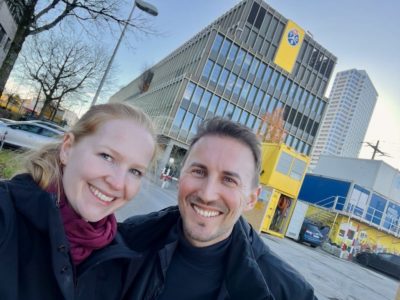
What happens when two mobility clubs send employees on a two-month exchange? The Club Connect pilot between ÖAMTC and TCS gave Sarah Pfeifer from ÖAMTC and Tim Sacher from TCS the opportunity to step outside their usual working environments, experience how another club operates and bring fresh ideas back to their own organisations.
The exchange showed that TCS and ÖAMTC share a strong commitment to their members, while each brings its own experience, strengths and approaches. By learning directly from one another, both clubs gained new ideas, a fresh perspective on their own work and stronger connections that can support future cooperation.
The idea behind Club Connect
Club Connect was built around a simple idea: instead of reinventing the wheel, clubs can learn from each other’s experiences, challenges and successes.
As Herwig Kummer, who oversaw the HR side of the pilot at ÖAMTC, explains, clubs are operating in a rapidly changing technological, social and demographic environment. For him, exchanges such as Club Connect are not only about professional learning, but also about bringing fresh perspectives and inspiration back to each organisation.
That learning can start even before participants arrive at their host club. During the preparation of the pilot, the HR teams of ÖAMTC and TCS worked closely together and gained insights into each other’s labour frameworks, employee benefits and ways of working. The preparation of the exchange therefore created value beyond the two participants, while also supporting their personal development and strengthening their connection to the club world.
Learning from each other
Spending two months in TCS’s Corporate Development department gave Sarah a close look at how the organisation works, from the Mini Future Day to the development of an internal idea management system and marketing measures for TCS Home Security. What stood out to her most was the hands-on approach within Corporate Development and how TCS identifies unmet needs and develops new services in response. Examples include Lex4you, a database providing legal information to members, as well as services related to campsites and the use of drones.
Comparing these approaches with her experience at ÖAMTC allowed Sarah to identify ideas that could potentially be explored further at home, while also contributing her own expertise in idea and trend management to TCS.
For Sarah, the experience also had a strong personal dimension. Stepping into a new working and cultural environment allowed her to become more open-minded, take responsibility and organise her time independently. “It is an experience that no one can take away from you,” she said.
TCS and ÖAMTC share many of the same priorities, but each has developed its own strengths and approaches. While many aspects felt surprisingly familiar, the exchange also highlighted subtle differences in culture, innovation practices and member engagement that offered valuable learning opportunities. At ÖAMTC, Tim was particularly interested in the club’s idea and innovation initiatives as well as its structured, long-term approach to venture building. Seeing these methods first-hand allowed him to identify ideas that could be useful to TCS.
“The most valuable takeaway was gaining an outside perspective. The exchange helped me learn from ÖAMTC’s strengths while seeing more clearly what TCS already does well and where we can continue to improve” said Tim.
This fresh perspective on one’s own organisation is one of the key benefits of Club Connect. It helps participants discover different approaches worth exploring at home, while also giving them a clearer appreciation of what already works well in their own club.
From knowledge sharing to closer cooperation
The value of the exchange goes beyond the ideas and practices participants take back with them. Spending time in another club also creates personal connections that can make future cooperation easier and more direct.
As Herwig explains: “bringing people together across clubs allows them to learn from one another through direct experience while building relationships based on trust.’’ The time spent at the partner club is only the beginning, with contacts and informal collaboration continuing after the exchange itself.
Through the exchange, Sarah and Tim built relationships with colleagues across different areas of both organisations, making complementary strengths and opportunities for collaboration more visible.. It also revealed previously unseen opportunities to bring together colleagues who could benefit from each other’s expertise.
The exchange has already strengthened links between the two clubs beyond the participants themselves. Sarah, for example, connected colleagues working on areas such as project management, AI, e-mobility, market research and the Club Shop, while ideas from TCS were shared with the relevant teams at ÖAMTC. These direct relationships can make future knowledge sharing faster and more practical. The clubs are also considering joint workshops on shared challenges, potentially opening the exchange to other Member Clubs in the future.
Looking ahead, Herwig would welcome the involvement of additional clubs in future editions of the programme. For Member Clubs, exchanges such as Club Connect offer a practical way to learn directly from each other’s experience, spark new ideas, support personal development and build stronger connections across the club world.